

Struggling to lose weight after 40 despite eating well and exercising? Your sleep might be the missing piece. Research links poor sleep with harder weight loss, and sleep problems become more common during perimenopause and menopause.
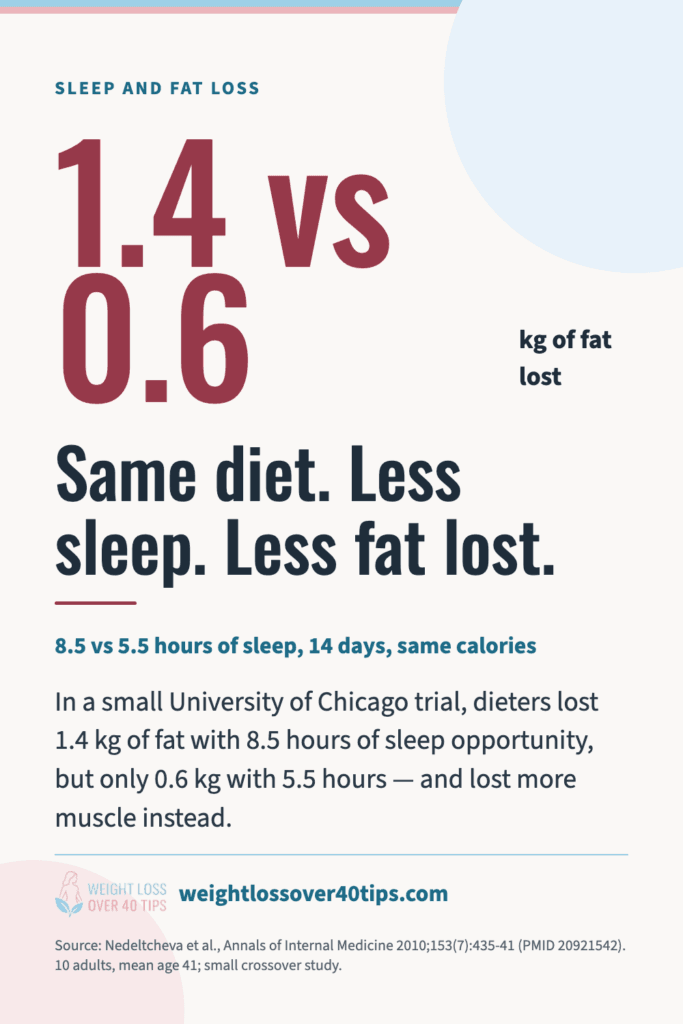
A small two-week study from the University of Chicago found that, on the same calorie intake, dieters lost 1.4 kg of fat with 8.5 hours of sleep opportunity but only 0.6 kg with 5.5 hours. If you’re doing everything right but still not seeing results, your sleep is worth a closer look.
This comprehensive guide on sleep and weight loss after 40 covers the science, explains why women face unique challenges, and gives you practical strategies to optimize sleep and weight loss after 40 for better results.

Sleep and Weight Loss After 40: The Science
Sleep isn’t passive rest — it’s when your body regulates the hormones that control hunger, metabolism, and fat storage. When you don’t get enough quality sleep, these systems can shift in ways that make weight gain more likely.
Hunger Hormones Go Haywire
Two key hormones control your appetite: ghrelin (the hunger hormone) and leptin (the satiety hormone). A small study published in the Annals of Internal Medicine found that two nights of restricted sleep in 12 healthy young men lowered leptin by 18% and raised ghrelin by 28%. Their hunger rose too, especially for calorie-dense, carbohydrate-rich foods.
The study was small and in young men, but it fits a wider body of research linking short sleep with bigger appetite.
Cortisol and Belly Fat
Sleep deprivation elevates cortisol, the stress hormone. Over time, persistently high cortisol is linked with:
- More abdominal fat, although stress, sleep and eating habits are hard to separate
- Poorer recovery and more difficulty sticking with healthy habits
Research in the journal Sleep found that after one night of partial or total sleep loss, healthy young men had evening cortisol levels 37% and 45% higher than after normal sleep. Higher evening cortisol can make it harder to wind down, feeding a cycle of poor sleep.
If you’re noticing more belly fat after 40, poor sleep could be a major contributor. Learn more in our guide on how to lose belly fat after 40.
If months of poor sleep have kept your cortisol elevated, generic calorie cutting tends to disappoint. Reverse Health builds its nutrition plan around that specific pattern, with a cortisol-focused programme for women over 40. We earn a commission if you buy or sign up through our link.
Insulin Resistance and Fat Storage
In a small study of healthy adults, a single night of only 4 hours’ sleep reduced insulin sensitivity by about 25%, according to research published in the Journal of Clinical Endocrinology & Metabolism. Lower insulin sensitivity makes blood sugar harder to control and is linked with weight gain over time.
Insulin resistance tends to become more common with age, so protecting your sleep is one more way to support healthy blood sugar.
Growth Hormone and Fat Burning
Human growth hormone (HGH) is released mainly during deep sleep, and it plays a role in muscle repair and metabolism. Poor sleep can reduce its release.
This is especially important if you’re doing strength training or other exercises for weight loss — without adequate sleep, recovery suffers and workouts feel harder.
Sleep and Weight Loss After 40: What the Research Shows
The evidence linking sleep to weight is consistent:
- The Chicago study: Dieters on the same calorie-restricted diet lost 0.6 kg of fat with 5.5 hours of sleep opportunity, versus 1.4 kg with 8.5 hours. With short sleep, most of the weight lost was fat-free mass rather than fat (Annals of Internal Medicine, 2010).
- Nurses’ Health Study: Women sleeping 5 hours or less per night were 32% more likely to gain 33+ pounds over 16 years compared to women sleeping 7 hours (American Journal of Epidemiology, 2006).
- Meta-analysis (2008): A meta-analysis including 604,509 adults found that short sleepers had 55% higher odds of obesity (Sleep, 2008).
- Randomized trial (2022): Researchers at the University of Chicago found that overweight adults who extended their sleep by 1.2 hours per night naturally ate 270 fewer calories per day — with no dietary intervention at all (JAMA Internal Medicine, 2022).
The message is clear: sleep deserves a place in any weight loss plan, alongside diet and exercise.
Why Women Over 40 Face Unique Sleep Challenges
If you’re finding it harder to sleep well after 40, you’re not imagining it. Several factors converge to disrupt sleep during this life stage:
Perimenopause and Menopause
Sleep problems are common during the menopause transition, including:
- Hot flashes and night sweats — these can wake you multiple times per night, fragmenting deep sleep
- More night-time waking — many women find they wake more easily and struggle to get back to sleep
- Increased anxiety and mood changes — hormonal shifts can trigger racing thoughts at bedtime
For more on how menopause affects your weight, see our article on menopause and weight gain.
Stress and Life Demands
Women in their 40s and 50s often juggle careers, aging parents, teenagers, and financial pressures. Chronic stress makes it harder to fall asleep and stay asleep, and tired people find healthy habits harder to keep.
Sleep Apnea
Many people don’t realize that sleep apnea risk increases significantly for women after menopause. After menopause, the risk rises and the gap with men narrows. If you snore, wake up gasping, or feel exhausted despite sleeping 7+ hours, talk to your doctor about a sleep study.
How Much Sleep Do You Need? Sleep and Weight Loss After 40 Guidelines
The research consistently points to 7-9 hours per night as the sweet spot for weight management. Here’s how different sleep amounts affect weight loss:
- Less than 6 hours: Linked in studies with more hunger, lower insulin sensitivity and a higher risk of weight gain.
- 6-7 hours: Better, but many adults still benefit from a little more.
- 7-8 hours: Within the range recommended for adults.
- 8-9 hours: Also within the recommended range; some people who train hard feel better with more. Good recovery also supports your metabolism.
Important: Sleep quality matters as much as quantity. Focus on both how long and how well you sleep.
8 Strategies to Improve Sleep and Weight Loss After 40
1. Set a Consistent Sleep Schedule
Go to bed and wake up at the same time every day — including weekends. Your circadian rhythm (internal body clock) thrives on consistency. Irregular sleep schedules disrupt melatonin production, making it harder to fall asleep and reducing sleep quality.
Action step: Choose a bedtime that allows 7.5-8 hours of sleep and stick to it for 2 weeks. Many people notice they feel more rested once the routine sticks.
2. Create a Cool, Dark Sleep Environment
Your bedroom temperature dramatically affects sleep quality. The ideal sleeping temperature is 65-68°F (18-20°C). This is especially important for women experiencing hot flashes.
- Use blackout curtains or a sleep mask to block all light
- Keep the room cool — use a fan, lower the thermostat, or try cooling sheets
- Remove electronics that emit light or heat
- Consider moisture-wicking pajamas and bedding if you experience night sweats
3. Stop Eating 2-3 Hours Before Bed
Late-night eating disrupts sleep in two ways: it raises your core body temperature (your body needs to cool down to sleep), and it can cause acid reflux or discomfort. Many people sleep better when they leave a gap between their last meal and bedtime.
If you’re hungry before bed, opt for a small protein-rich snack like a handful of almonds or a spoonful of cottage cheese. Avoid sugar and refined carbs, which can spike blood sugar and wake you up at 3 AM. For meal timing guidance, try our free meal plan.
4. Limit Caffeine After 2 PM
Caffeine has a half-life of 5-6 hours, meaning half the caffeine from your 3 PM coffee is still in your system at 9 PM. That afternoon pick-me-up may be affecting your sleep without you realizing it.
Action step: Switch to herbal tea or decaf after 2 PM. If you rely on afternoon caffeine for energy, that’s a sign your sleep quality needs improving — address the root cause rather than masking it.
5. Establish a Wind-Down Routine
Your body needs a transition period between activity and sleep. A consistent 30-60 minute wind-down routine signals your brain to start producing melatonin.
- Dim the lights 1 hour before bed — bright light suppresses melatonin production
- Put away screens — blue light from phones and tablets is especially disruptive. If you must use devices, enable night mode
- Try relaxation techniques — deep breathing, gentle stretching, reading, or journaling. Our mindset journal prompts can help quiet racing thoughts
- Take a warm bath or shower — the post-bath temperature drop mimics your body’s natural pre-sleep cooling
6. Exercise at the Right Time
Regular exercise improves sleep quality significantly — but timing matters. Vigorous exercise within 2-3 hours of bedtime can keep cortisol and adrenaline elevated, making it harder to fall asleep.
The best approach for women over 40:
- Morning or early afternoon: Best time for intense workouts — strength training, HIIT, or vigorous cardio
- Evening: Stick to gentle activities — walking, yoga, or stretching
- Consistency: Regular exercise is linked to better sleep quality
7. Consider Sleep-Supporting Supplements
Some supplements can help improve sleep quality, especially during perimenopause and menopause. Always consult your doctor before starting any supplement.
- Magnesium glycinate (200-400mg before bed): Helps relax muscles and calm the nervous system. A 2025 randomized trial found magnesium bisglycinate improved self-reported sleep quality in adults. For more on supplements, see our guide to supplements for weight loss over 40.
- Melatonin (0.5-3mg): Start with the lowest effective dose. Useful for resetting your sleep schedule, especially helpful as natural melatonin production declines with age.
- Ashwagandha (300mg): An herbal supplement studied for stress and sleep; the trials are small, and it is not suitable for everyone, so check with your doctor.
- Tart cherry juice: Contains small amounts of melatonin; a few small studies suggest it may help some people sleep longer.
8. Manage Stress Before It Manages You
Stress is one of the most common causes of poor sleep. If you lie in bed with a racing mind, stress management isn’t optional — it’s essential for both sleep and weight loss.
- Brain dump journaling: Write down tomorrow’s to-do list before bed to clear your mind
- 4-7-8 breathing technique: Inhale for 4 seconds, hold for 7, exhale for 8. Repeat 4 times
- Progressive muscle relaxation: Systematically tense and release each muscle group from toes to head
- Limit news and social media in the evening — these activate your stress response
- Perimenopause Weight Loss: What Actually Works
Sleep and Weight Loss After 40: Your Action Plan
You don’t need to overhaul your entire sleep routine overnight. Start with these high-impact changes for sleep and weight loss after 40:
Week 1: Set a consistent bedtime and wake time. Remove screens from the bedroom.
Week 2: Cut caffeine after 2 PM. Add a 30-minute wind-down routine.
Week 3: Optimize your sleep environment (temperature, darkness, noise). Try magnesium before bed.
Week 4: Evaluate your progress. Track your weight, energy levels, and cravings. Give the changes a few weeks before judging them.
Combine these sleep strategies with a solid weight loss plan and the right weight loss program for maximum results. Sleep isn’t the enemy of productivity — it’s the foundation of sustainable weight loss after 40.
Frequently Asked Questions
How are sleep and weight loss after 40 connected?
Short sleep is linked with more hunger, lower insulin sensitivity and a higher risk of weight gain. In a 2022 randomized trial in JAMA Internal Medicine, adults with overweight who extended their sleep by about 1.2 hours a night ate about 270 fewer calories a day, without being asked to change their diet. Better sleep works best alongside a healthy diet and regular exercise.
Why do I gain weight when I don’t sleep well?
In a small study of young men, two nights of short sleep raised the hunger hormone ghrelin by 28% and lowered the fullness hormone leptin by 18%. Short sleep also reduces insulin sensitivity. Together, these changes make you hungrier and more likely to reach for high-calorie foods. Learn more about why it’s hard to lose weight after 40.
For sleep and weight loss after 40, is it better to sleep more or exercise more?
If you’re choosing between an extra hour of sleep and an extra hour of exercise, choose sleep — especially if you’re getting less than 7 hours. Without enough sleep, recovery suffers and appetite is harder to manage. Once you’re consistently getting 7+ hours, then adding more exercise becomes highly beneficial.
What’s the best sleeping position for weight loss?
There’s no specific sleeping position that promotes weight loss. What matters is whatever position helps you sleep most deeply and comfortably. If you experience acid reflux (which disrupts sleep), sleeping on your left side with your head slightly elevated can help. If you deal with back pain that disrupts sleep, try sleeping on your side with a pillow between your knees.
Should I take melatonin for sleep and weight loss after 40?
Melatonin isn’t a weight loss supplement — it’s a sleep aid. However, if poor sleep is contributing to your weight gain, melatonin can help by improving sleep quality and duration. Start with a low dose (0.5-1mg) and take it 30-60 minutes before bed. It’s generally safe for short-term use, but consult your doctor if you plan to take it regularly, especially if you’re on other medications.
Correction (11 October 2026): we now describe the University of Chicago sleep study with its kilogram figures (1.4 kg vs 0.6 kg of fat lost). The study’s 55% figure refers to the drop in the proportion of weight lost as fat, so our earlier wording, “55% less fat”, was imprecise.
Get Your Free 7-Day Meal Plan
Join women over 40 getting weekly weight loss tips, meal plans, and honest program reviews.