
You used to skip dessert for a week and drop 5 pounds. Now you’re eating salads, walking daily, and the scale won’t budge. Sound familiar? If you’re trying to lose weight after 40, this isn’t in your head — there are real biological reasons why weight loss gets harder with age.
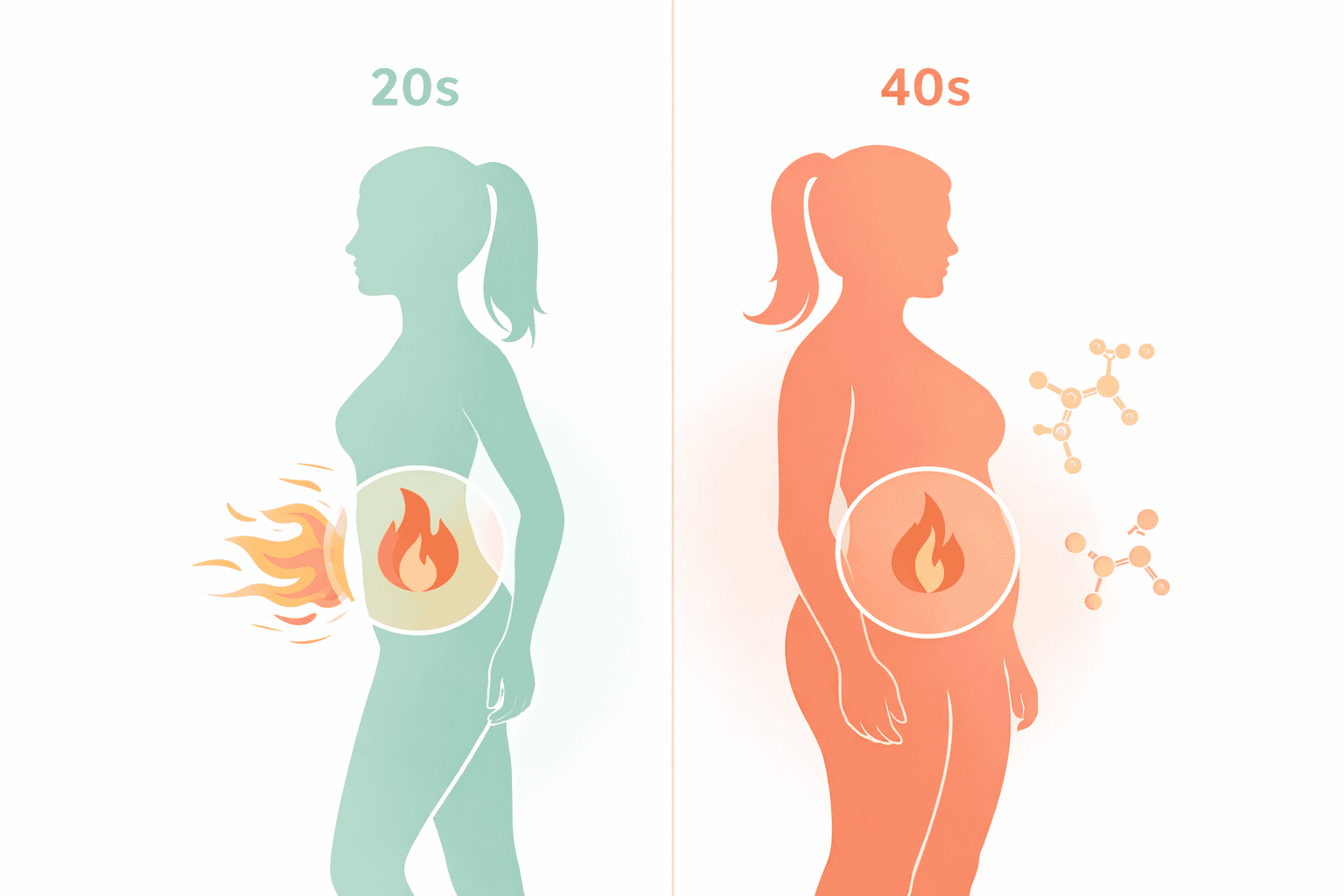
Understanding why your body has changed is the first step to finding strategies that actually work. Let’s break down the science — no jargon, just the facts you need.
6 Reasons Why It’s Hard to Lose Weight After 40
1. Your Hormones Are Shifting
This is the biggest factor most women don’t fully understand. Starting in your late 30s and accelerating through your 40s, your body enters perimenopause — the transition period before menopause.
During perimenopause:
- Estrogen levels fluctuate wildly before eventually declining. These fluctuations can trigger water retention, bloating, and increased fat storage — particularly around the abdomen.
- Progesterone drops, which can lead to insulin resistance and increased appetite.
- Testosterone decreases, making it harder to build and maintain the muscle that keeps your metabolism humming.
The result? Your body shifts from storing fat on your hips and thighs (pear shape) to storing it around your midsection (apple shape). This visceral fat isn’t just a cosmetic concern — it’s metabolically active and linked to higher risks of heart disease and diabetes.
2. Your Metabolism Is Not the Problem — Your Body Composition Is
Here’s where the usual advice gets it wrong. A landmark 2021 study published in Science (Pontzer et al., Science 2021;373:808–812) found that your basal metabolic rate (BMR) — the calories your body burns just to stay alive — stays remarkably stable from age 20 all the way to 60, once you account for body composition. The steep decline doesn’t start until around 60. So your metabolism isn’t quietly betraying you the day you turn 40.
What does change is what your body is made of. You lose 3-5% of your muscle mass per decade after 30, and muscle burns more calories at rest than fat does. Add the hormonal shifts described above, plus the simple fact that most of us move less in our forties than we did in our twenties, and the practical result is real: many women find they need fewer calories than they did in their 20s to maintain the same weight.
The slowdown you’re feeling is genuine — it just isn’t your metabolic rate that caused it. That distinction matters, because it points to something you can actually change (build and keep muscle) instead of something you can only resign yourself to.
A small daily surplus adds up slowly over months and years. This is why many women notice a gradual “creep” on the scale even when they haven’t changed their eating habits.
3. You’re Losing Muscle Mass
Starting around age 30, women lose approximately 3-5% of muscle mass per decade through a process called sarcopenia. Without active effort to maintain muscle through strength training, this loss speeds up after menopause.
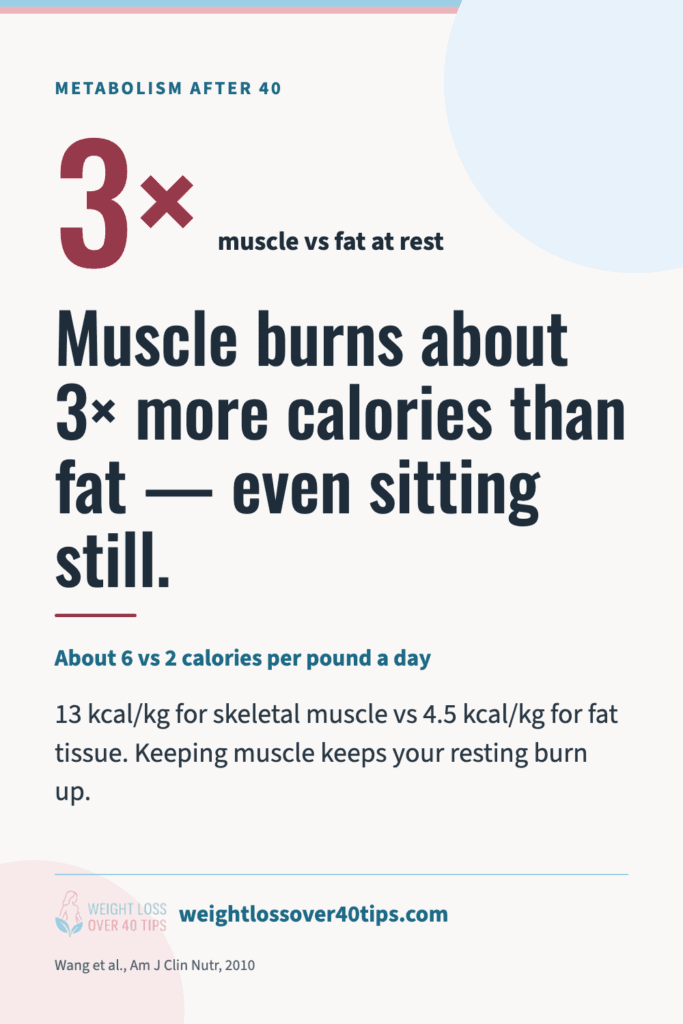
Why does this matter for weight loss? Muscle is metabolically expensive — it burns calories even when you’re sitting on the couch. Every pound of muscle burns about 6 calories per day at rest, compared with about 2 calories per pound of fat (Wang et al., Am J Clin Nutr 2010: 13 kcal/kg for skeletal muscle, 4.5 kcal/kg for fat). Lose 5 pounds of muscle and your body burns roughly 30 fewer calories daily.
4. Insulin Resistance Is Increasing
As estrogen declines, your cells become less responsive to insulin — the hormone that helps shuttle sugar from your blood into your cells for energy. When insulin doesn’t work efficiently, your body produces more of it.
Higher insulin levels signal your body to store more fat and hold onto existing fat stores. This is why many women over 40 notice that even moderate amounts of sugar, bread, and processed carbs seem to affect them more than they used to.
5. Stress and Cortisol Are Working Against You
Your 40s often come with peak life stress — career demands, aging parents, teenagers, financial pressures, relationship challenges. All of this drives up cortisol, your primary stress hormone.
Chronically elevated cortisol:
- Promotes fat storage, especially visceral belly fat
- Increases cravings for high-calorie comfort foods
- Breaks down muscle tissue
- Disrupts sleep (which compounds all the other problems)
- Raises blood sugar levels
It’s a vicious cycle: stress makes you gain weight, weight gain increases stress, and the cycle continues.
6. Sleep Quality Is Declining
Hormonal changes, night sweats, anxiety, and life stress all conspire to wreck your sleep after 40. And poor sleep is one of the most underestimated barriers to weight loss.
In a study of 1,024 adults, people who habitually slept 5 hours instead of 8 had (Taheri et al., PLoS Medicine 2004):
- About 15% more ghrelin (the hunger hormone)
- About 15% less leptin (the fullness hormone)
- Perimenopause Weight Loss: What Actually Works
How to Actually Lose Weight After 40?
The good news: none of these changes mean you can’t lose weight. They just mean you need a smarter approach than what worked in your 20s. Here are the key shifts that make the biggest difference:
Prioritize Protein
Aim for 25-30 grams per meal. Protein preserves muscle, boosts metabolism through the thermic effect of food, and keeps you satisfied between meals. This single change often has the biggest impact.
Start Strength Training
This is non-negotiable after 40. Just 2-3 sessions per week of resistance training can reverse years of muscle loss and significantly boost your resting metabolism. You don’t need a gym — bodyweight exercises, resistance bands, or light dumbbells at home work perfectly.
Manage Your Carbs Strategically
You don’t need to go low-carb, but being strategic helps. Focus on complex carbs (sweet potatoes, quinoa, oats) and pair them with protein or fat to slow the blood sugar response. Minimize refined sugars and processed foods that spike insulin.
Address Stress and Sleep
These aren’t luxuries — they’re essential for weight loss after 40. Even 10 minutes of daily meditation, a consistent bedtime routine, or simply saying “no” to one obligation can make a measurable difference in your cortisol levels and sleep quality.
👉 For a complete, step-by-step plan, check out our complete guide to weight loss after 40.
When to Talk to Your Doctor
If you’re doing everything right and still not seeing results, it may be worth getting these checked:
- Thyroid function (TSH, T3, T4) — hypothyroidism is common in women over 40 and directly impacts metabolism
- Hormone panel — estrogen, progesterone, testosterone levels
- Fasting insulin and blood sugar — to check for insulin resistance
- Vitamin D and B12 — deficiencies are common and affect energy and metabolism
- Cortisol levels — if you suspect chronic stress is a factor
- The Smoothie Diet Review: Does It Work for Women Over 40?
Don’t accept “it’s just aging” as an answer. These are treatable conditions that, once addressed, can make weight loss dramatically easier.
Programs That Work With Your Changing Body
The best weight loss programs for women over 40 are the ones that account for these hormonal and metabolic changes. Here are three worth considering:
- How to Lose Weight After 40: Complete Guide
- Best Weight Loss Programs for Women Over 40
- Smoothie Diet vs Noom: Which Is Better?
- Why Is It So Hard to Lose Weight After 40?
- Menopause Weight Gain: What You Can Do
- Walking for Weight Loss Over 40
- Intermittent Fasting for Women Over 40
- 25 Weight Loss Statistics for Women Over 40
👉 Compare all programs for women over 40
📥 Free Download: 7-Day Meal Plan for Women Over 40
High-protein, hormone-supporting meals + complete shopping list. Designed specifically for your body after 40.
Get the Free Meal Plan →Ready to take action? Check our best weight loss programs for women over 40, read how to lose weight after 40 step-by-step, or start with walking for weight loss.
Frequently Asked Questions
For evidence-based weight management guidance, the National Institute on Aging provides helpful resources for women over 40.
The Bottom Line
Weight loss after 40 is harder — but it’s not impossible. The key is understanding that your body has changed and adjusting your approach accordingly. Stop blaming yourself for “not trying hard enough” and start working with your biology instead of against it.
Focus on protein, strength training, sleep, and stress management. Consider getting a hormone panel done. And if you want structured support, explore a program designed for women in this stage of life.
Popular options include WW (Weight Watchers), Reverse Health, and Dr. Kellyann’s bone broth protocol. For daily nutrition gaps, check our Huel review and AG1 greens review. See our science-backed diet guide for help choosing.
Next step: Read our complete guide to losing weight after 40 for actionable strategies you can start today.
Want to know what tends to work? See what people who keep the weight off have in common. Or check our weight loss after 40 FAQ for answers to the most common questions.
Correction (12 October 2026): we corrected the section on muscle loss. Muscle loss speeds up after menopause rather than at 40, and we removed a reference to a general metabolic slowdown, because resting metabolism stays fairly stable from 20 to 60. We also replaced an unsourced list of sleep effects with the study behind the hormone figures, and removed unsourced calorie and weight-gain numbers.
Disclaimer: This article is for informational purposes only and does not constitute medical advice. Always consult your healthcare provider before making changes to your diet, exercise routine, or starting any supplements.
Get Your Free 7-Day Meal Plan
Join women over 40 getting weekly weight loss tips, meal plans, and honest program reviews.