
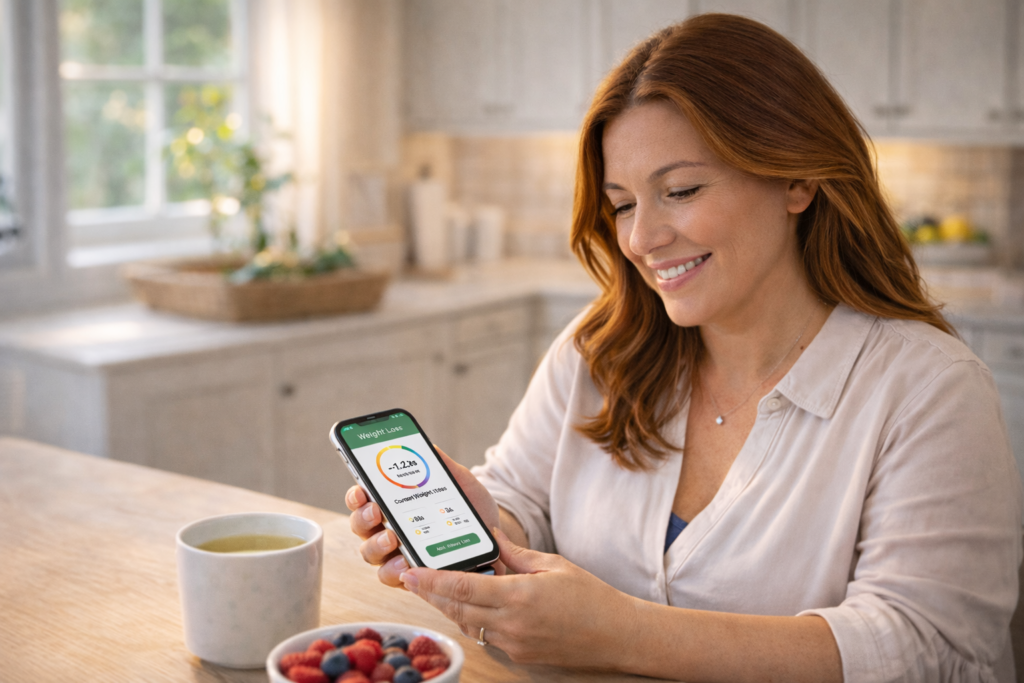
Noom Review: Is It Worth It for Women Over 40?
An honest, in-depth look at the psychology-based weight loss app that helps you understand why you eat — and how to change it for good.
Quick Verdict
Rating: 4.5/5 ⭐ | Price: From $17.42/mo (annual) | Best For: Women who want to understand their eating habits | Trial: 7-day trial at sign-up
Noom takes a psychology-first approach to weight loss. Unlike meal plans that tell you what to eat, Noom teaches you why you eat the way you do. Perfect for women over 40 who have tried every diet and want lasting change.
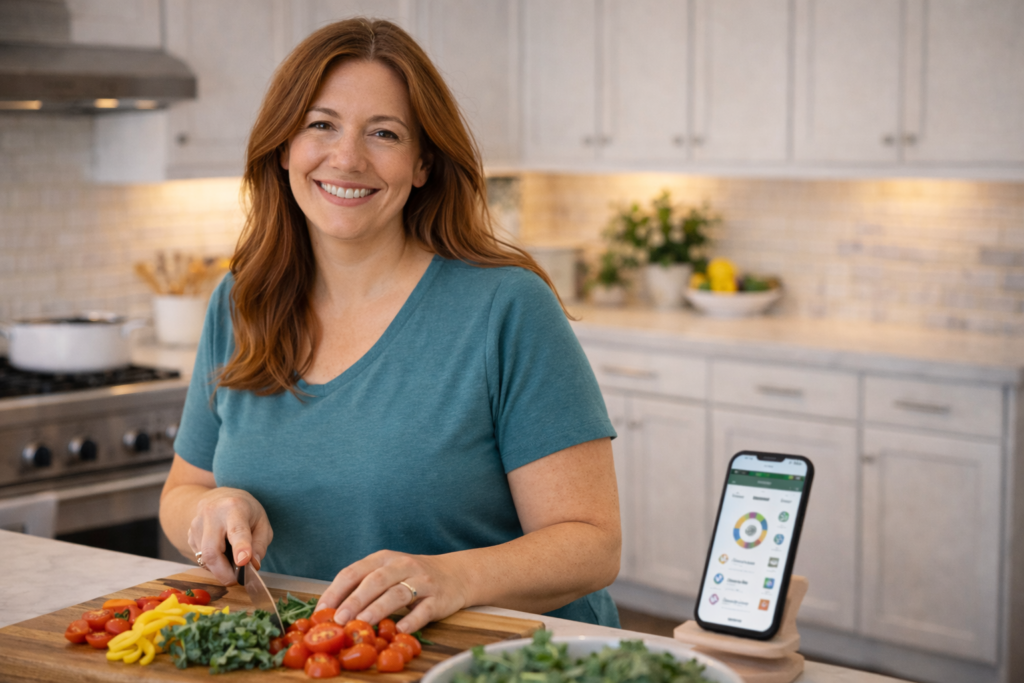
What Is Noom?
Noom is a psychology-based weight loss app that helps you build healthy habits through daily lessons, food logging, and personal coaching. Unlike traditional diets that focus on restriction, Noom teaches you to understand your relationship with food.
The app uses a color-coded food system (green, yellow, orange) to help you make better choices without eliminating any food groups. Think of it as a personal health coach in your pocket.
For women over 40, this approach is especially powerful because it addresses the emotional and hormonal factors that make weight loss harder with age.
How Noom Works
1
Take the Quiz
Answer questions about your goals, lifestyle, and eating habits. Noom creates a personalized plan just for you.
2
Learn Daily
5-10 minute daily lessons on nutrition psychology. Log your meals with the color-coded food system. Track your progress.
3
Build Habits
With coaching support, develop sustainable habits that stick. No more yo-yo dieting. Real, lasting change.
Pros & Cons
What We Love
- ✅ Psychology-based approach that creates lasting change
- ✅ Personal coaching and group support included
- ✅ 7-day trial available at sign-up
- ✅ Color-coded food system is easy to follow
- ✅ Research-backed: 5.6% weight loss at 6 months
- ✅ Addresses menopause and hormonal changes
What Could Be Better
- ⚠️ Daily food logging can feel time-consuming
- ⚠️ Monthly subscription adds up over time
- ⚠️ No detailed macronutrient tracking
- ⚠️ Coach quality can vary
- ⚠️ Not suitable for eating disorder history
- ⚠️ Daily weigh-ins may increase anxiety for some
Is Noom Right for You?
Perfect For You If…
- ✅ You want to understand WHY you overeat
- ✅ You prefer an app-based approach
- ✅ You value coaching and accountability
- ✅ You are tired of restrictive diets
- ✅ You want gradual, sustainable weight loss
Maybe Not If…
- ⏭️ You prefer a structured meal plan with recipes
- ⏭️ You dislike daily food logging
- ⏭️ You have a history of eating disorders
- ⏭️ You want quick results in 21 days
- ⏭️ You are not comfortable with daily weigh-ins
Noom Pricing & Plans
Best Value: Annual plan at $17.42/month
Monthly plan: ~$70/month | 4-month plan: ~$42.25/month
All plans include: Daily lessons, food logging, personal coaching, group support, and recipe database.
7-Day Trial Available at Sign-Up
Ready to Try Noom?
Noom offers a 7-day trial at sign-up. Check the trial terms at checkout — plans renew automatically unless you cancel.
Noom for Menopause and Perimenopause: What It Does and Does Not Do
This is the question we are asked most often about Noom, so it deserves a straight answer rather than a marketing line. Noom is not a menopause programme. It is a general behaviour-change app that happens to be used by a lot of women in their forties and fifties. That is not a criticism — it just changes what you should expect from it.
What genuinely helps in perimenopause
The psychology-first approach is a real fit for this stage of life, and here is why. In perimenopause the old feedback loop breaks: the same effort produces a smaller result, and for most women that is where the frustration — and the giving up — actually happens. An app built around noticing your eating patterns, rather than only counting them, addresses that directly.
- Logging without a rigid plan. Sleep, hot flushes and mood swings make strict meal plans collapse. A system that tolerates an imperfect week survives perimenopause better than one that does not.
- Attention to why you eat. Stress and disrupted sleep are ordinary in this stage, and both change appetite. The daily lessons are aimed exactly at that link.
- A coach who has heard it before. The single most common complaint we hear is “my doctor said it is just my age.” A coach who takes the change seriously is worth something, even if they are not a clinician.
Where it falls short for women over 40
- No strength training. This is the real gap. Muscle loss is one of the defining changes of this decade, and a calorie-and-psychology app does not address it. You need resistance training alongside, from somewhere else.
- No protein target. The colour system rates foods by calorie density, which is not the same question as whether you are eating enough protein to hold on to muscle.
- No medical layer. Noom does not assess thyroid function, iron, or whether hormone therapy is worth discussing. If your symptoms are severe, the app is the wrong first stop — see a clinician first. The National Institute on Aging has a plain-language starting point on what menopause actually is, and the Office on Women’s Health covers menopause and your health more broadly.
- Weight is not the only outcome that matters now. Bone density, muscle and sleep all shift in this decade, and none of them appear on the app’s dashboard. NIDDK’s overview of weight-management approaches is a useful reality check on what any single tool can do.
The honest summary: Noom can be a good fit for the behavioural half of the problem in perimenopause, and it does nothing for the physiological half. If you use it, pair it with strength training and a protein target. If you were hoping for a menopause-specific programme, this is not one.
Noom vs Mayo Clinic Diet: Which Suits a Woman Over 40?
These two come up together often, and they are less similar than they look. Both use a food-grouping system; only one of them is built around changing your thinking. For the full side-by-side, including 2026 prices, see our Noom vs Mayo Clinic Diet comparison.
| Noom | Mayo Clinic Diet | |
|---|---|---|
| Core idea | Psychology and habit change | Structured healthy-eating plan |
| Food system | Colour groups by calorie density | Food pyramid, portion based |
| Coaching | Human coach in-app | Unlimited group coaching; 1:1 dietitian sessions optional |
| Structure | Loose — you choose meals | Tighter — meal plans provided |
| Best if | You know what to eat but not why you do not do it | You want to be told what to eat |
| Over-40 gap | No strength or protein guidance | Same gap, plus less flexibility |
If your obstacle is evening eating after a hard day, Noom is aimed at that. If your obstacle is that you genuinely do not know what a balanced dinner looks like, the structure of the Mayo plan does more for you. Our full write-up is here: Mayo Clinic Diet review for women over 40.
Noom vs Reverse Health: Behaviour App or Menopause Programme?
This is the more useful comparison for this audience, because the two answer different questions. Reverse Health is built specifically around women in menopause; Noom is built around behaviour and used by everyone.
| Noom | Reverse Health | |
|---|---|---|
| Designed for | General adult audience | Women in peri- and post-menopause |
| Main mechanism | Daily psychology lessons + logging | Quiz-led plan, menopause framing |
| Movement | Steps and general activity | Programme-based, incl. low-impact options |
| Weak spot | Nothing for muscle or protein | Price is not published up front |
Choose on the question you actually have. If it is “I know what to do and I keep not doing it”, that is a behaviour problem and Noom is built for it. If it is “my body stopped responding and nobody explains why”, a menopause-framed programme will feel more relevant. Our detailed look: Reverse Health review for women over 40. There is also a direct Smoothie Diet vs Noom comparison if you are weighing a shorter, food-led option.
We are not paid by Noom and there is no affiliate link on this page — at the time of writing we have no commercial relationship with them. That is also why this review can say plainly where the app falls short.
Frequently Asked Questions
How does Noom work?
Noom uses a psychology-based approach with daily 5-10 minute lessons, a color-coded food logging system, and personal coaching. You learn to understand your eating habits and build sustainable changes over time.
Is Noom safe for women over 40?
Yes! Noom is designed to work for all ages and specifically addresses challenges like hormonal changes and menopause. Their coaches have experience supporting women through these transitions. Always consult your doctor before starting any new program.
How much does Noom cost?
Noom starts at $17.42 per month with an annual plan. Monthly plans are around $70. Noom advertises a 7-day trial at sign-up; the exact terms can vary with promotions and how you sign up, and plans renew automatically unless you cancel.
What if Noom does not work for me?
You can cancel at any time in the app, in Noom’s Subscription Portal or through your app store, and you keep access until the end of the billing cycle. According to Noom, first-time Noom Weight charges may be eligible for a refund if you contact support within 14 days of purchase.
Do I need special equipment or foods?
No! Noom works with whatever foods you already eat. There are no special supplements, shakes, or meal kits to buy. You just need a smartphone to use the app.
How is Noom different from The Smoothie Diet?
The Smoothie Diet gives you a structured 21-day meal plan focused on smoothie-based nutrition. Noom takes a longer-term approach focused on behavioral psychology and habit change. Both are excellent choices — it depends on whether you prefer structure or flexibility.
Ready to Change Your Relationship with Food?
Noom offers a 7-day trial at sign-up, so you can see whether a psychology-first approach suits you. Plans renew automatically unless you cancel.
Affiliate Disclosure: This page contains affiliate links. If you sign up for Noom through our links, we may earn a commission at no extra cost to you. We only recommend products we genuinely believe in. Results vary. This is not medical advice — always consult your doctor before starting any weight loss program.
Correction (11 October 2026): we removed an unsourced statement about how quickly users see results.
Get Your Free 7-Day Meal Plan
Join women over 40 getting weekly weight loss tips, meal plans, and honest program reviews.