

If you’re a woman over 40, you’ve probably noticed that what worked in your 20s and 30s just doesn’t cut it anymore. The scale creeps up, your energy dips, and no matter how carefully you eat, the results feel painfully slow. You’re not imagining it — your body is genuinely changing.
Here’s the good news: the right supplements can give your body the support it needs to work with you, not against you. But let me be clear from the start — supplements are exactly what the name implies. They supplement a healthy diet and active lifestyle. They’re not magic pills, and anyone who tells you otherwise is selling something you don’t need.
We’ve reviewed the research on the supplements most often recommended for weight loss after 40 and kept the ones with at least some scientific support. Whether you’re dealing with hormonal shifts, a sluggish metabolism, or stubborn belly fat that appeared seemingly overnight, this guide will help you make smart, informed choices.
Already have the basics down? Make sure you’ve also read our complete guide to losing weight after 40 for the full picture.
Why Supplements Matter More After 40
Your body at 40+ is fundamentally different from your body at 25 — and that’s not a bad thing, but it does require a different approach. Here’s what’s happening beneath the surface:
Hormonal shifts change everything. As estrogen and progesterone levels fluctuate and eventually decline during perimenopause and menopause, your body becomes more prone to storing fat — especially around the midsection. These hormonal changes also affect your mood, sleep quality, and appetite regulation, creating a cascade of effects that make weight management significantly harder.
Some nutrients get harder to absorb with age. Vitamin B12 is a good example: it depends on stomach acid to be released from food, and older adults are more likely to run low.
Muscle mass declines naturally. You lose about 3–5% of muscle mass per decade from around age 30, and the change often becomes more noticeable by about 60 (Office on Women’s Health). Since muscle is metabolically active tissue, less muscle means a slower metabolism. The right supplements, combined with strength training, can help preserve and rebuild lean muscle.
Stress and cortisol take a bigger toll. Chronic stress drives cortisol levels up, which may encourage fat storage around the belly. Many women in their 40s and 50s are juggling careers, aging parents, teenagers, and their own health changes — creating the perfect storm for stress-related weight gain.
The 10 Best Supplements for Weight Loss After 40
Not every supplement on the market is worth your money. These ten have at least some scientific support, though the strength of the evidence varies, and they address the specific challenges women over 40 face when trying to lose weight.
1. Protein Powder (Whey or Plant-Based)
What it does: Protein powder provides a concentrated, convenient source of high-quality protein that supports muscle repair, growth, and maintenance. It also helps regulate appetite hormones, keeping you fuller for longer after meals.
How it helps after 40: As muscle mass naturally declines with age, adequate protein intake becomes critical. An international expert group recommends at least 1.0–1.2 grams of protein per kilogram of body weight a day for adults over 65 to maintain muscle (PROT-AGE Study Group, 2013); there is no separate official figure for women in their 40s. Protein also has the highest thermic effect of any macronutrient, meaning your body burns more calories digesting it. If you’re following an intermittent fasting plan, protein powder helps you hit your targets in a shorter eating window.
Recommended dosage: 20-30 grams per serving, once or twice daily, ideally after workouts or as part of a meal.
What to look for: Choose a powder with minimal added sugars (under 3 grams per serving), no artificial sweeteners, and at least 20 grams of protein per scoop. Whey protein isolate is excellent for absorption. If you’re dairy-sensitive, look for pea protein or a blended plant-based formula. Third-party testing certification is a must.
Want a meal replacement that covers protein and more? Read our in-depth Huel review to see how it stacks up for women over 40.
2. Omega-3 Fish Oil
What it does: Omega-3 fatty acids (EPA and DHA) reduce systemic inflammation, support heart and brain health, and help regulate blood sugar and insulin sensitivity.
How it helps after 40: Chronic low-grade inflammation is one of the hidden drivers of weight gain after 40. It interferes with leptin signaling (the hormone that tells your brain you’re full) and promotes insulin resistance, which makes your body more likely to store calories as fat. Omega-3s combat this inflammation at the cellular level. Studies also suggest that fish oil supplementation, combined with exercise, leads to greater fat loss compared to exercise alone.
Recommended dosage: 1,000-2,000 mg of combined EPA and DHA daily, taken with a meal containing fat for better absorption.
What to look for: Choose a supplement that lists the actual EPA and DHA amounts (not just “fish oil” total). Look for molecular distillation to remove heavy metals, and check for IFOS (International Fish Oil Standards) certification. Triglyceride form absorbs better than ethyl ester form.
3. Vitamin D3
What it does: Vitamin D3 (cholecalciferol) is a fat-soluble vitamin that functions more like a hormone in the body. It plays essential roles in calcium absorption, immune function, mood regulation, and metabolic health.
How it helps after 40: About 42% of US adults were vitamin D deficient in a national survey, and deficiency was more common in people with obesity (Forrest & Stuhldreher, 2011). In a year-long trial in postmenopausal women on a weight-loss program, vitamin D3 did not increase weight loss compared with placebo, although women whose levels became normal lost more than those whose levels stayed low (Mason et al., 2014). Vitamin D also supports bone density, which is crucial as estrogen levels decline.
Recommended dosage: 2,000-4,000 IU daily, though your doctor may recommend more based on blood work. Take with a fat-containing meal.
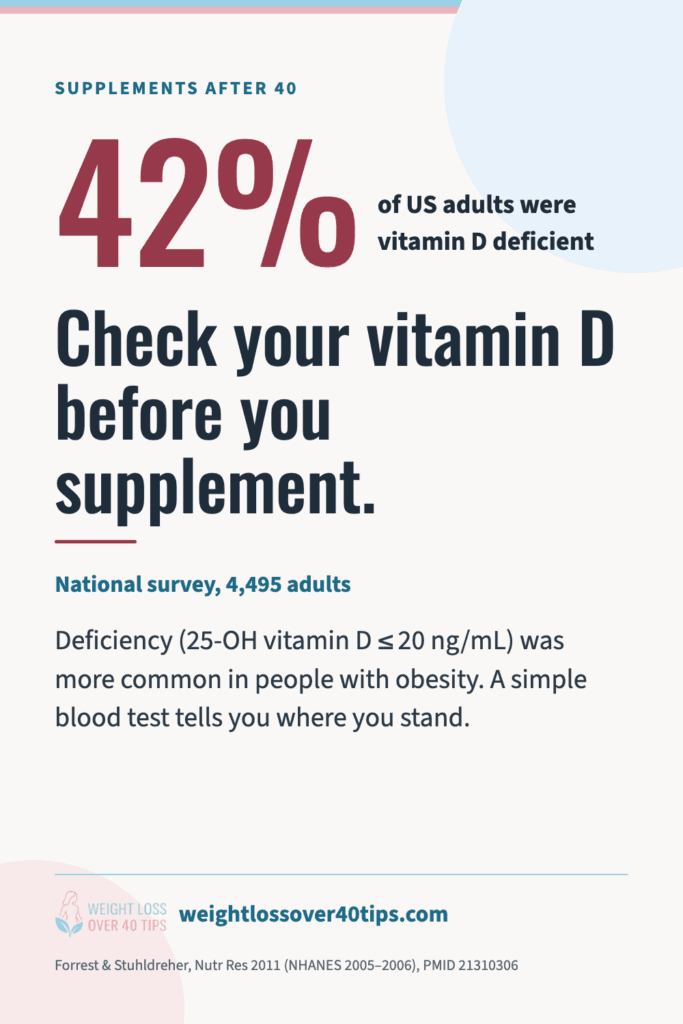
What to look for: Choose D3 (cholecalciferol), not D2 (ergocalciferol) — D3 is more effective at raising and maintaining blood levels. Liquid softgel forms tend to absorb better than tablets. Get your levels tested (a simple blood test for 25-hydroxyvitamin D) before starting to determine your ideal dose.
4. Magnesium
What it does: Magnesium is involved in over 300 enzymatic reactions in the body, including energy production, muscle and nerve function, blood sugar regulation, and protein synthesis.
How it helps after 40: Many people in the US consume less than the recommended amount of magnesium (NIH Office of Dietary Supplements). For women over 40, inadequate magnesium contributes to poor sleep, increased cortisol, insulin resistance, and muscle cramps. Better sleep alone can significantly impact weight loss, as sleep deprivation raises ghrelin (hunger hormone) and lowers leptin (satiety hormone). Magnesium also helps manage stress-related cravings and supports healthy blood sugar levels, reducing the energy crashes that lead to overeating.
Recommended dosage: 300-400 mg daily, taken in the evening for the added benefit of improved sleep quality.
What to look for: Magnesium glycinate is the best form for sleep and relaxation with minimal digestive issues. Magnesium citrate is a good alternative for regularity. Avoid magnesium oxide — it has very poor absorption rates. Look for chelated forms for maximum bioavailability.
5. Probiotics
What it does: Probiotics are live beneficial bacteria that support gut health, improve digestion, strengthen immune function, and influence the gut-brain axis.
How it helps after 40: Emerging research on the gut microbiome has revealed that the composition of your gut bacteria directly impacts weight management. Certain bacterial strains influence how many calories you extract from food, how you store fat, and even how hungry you feel. Women over 40 often experience changes in gut flora due to hormonal shifts, medication use (especially antibiotics), and dietary changes. Studies have shown that specific probiotic strains — particularly Lactobacillus gasseri and Lactobacillus rhamnosus — are associated with reduced belly fat and improved weight loss outcomes.
Recommended dosage: Look for at least 10-20 billion CFU (colony-forming units) daily with multiple diverse strains.
What to look for: Choose a probiotic with strains that have been clinically studied for weight management. Make sure the product guarantees CFU count at time of expiration, not just at manufacturing. Delayed-release capsules help the bacteria survive stomach acid. Refrigerated formulas are often (but not always) more potent.
6. Green Tea Extract (EGCG)
What it does: Green tea extract provides concentrated levels of epigallocatechin gallate (EGCG), a powerful catechin antioxidant that has been extensively studied for its metabolic effects.
How it helps after 40: EGCG has been shown to increase fat oxidation (your body’s ability to burn fat for fuel) and boost thermogenesis (calorie burning through heat production). A meta-analysis of 11 studies found that green tea catechins had a small effect on weight loss and weight maintenance — about 1.3 kg on average (Hursel et al., 2009). The effect is small, and green tea extract is not risk-free: in its 2018 safety review, the European Food Safety Authority found that supplement doses of 800 mg of EGCG a day or more were linked to raised liver enzymes. Stay within the label dose, take it with food, and talk to your doctor first if you have liver problems or take medication. It also provides antioxidant protection against cellular aging.
Recommended dosage: 250-500 mg of EGCG daily. If you’re caffeine-sensitive, look for decaffeinated versions, as standard green tea extract does contain some caffeine.
What to look for: Choose an extract standardized to at least 45-50% EGCG. Avoid products with excessive fillers. Take on an empty stomach for maximum absorption, but switch to taking it with food if you experience any nausea. Start with a lower dose to assess tolerance.
7. Fiber Supplement
What it does: Fiber supplements provide soluble and/or insoluble fiber that supports digestive health, feeds beneficial gut bacteria, regulates blood sugar, and promotes lasting satiety.
How it helps after 40: National surveys suggest that only about 5% of people in the US meet fiber recommendations (Quagliani & Felt-Gunderson, 2017). This fiber gap becomes more problematic after 40, when digestive efficiency naturally slows. Soluble fiber forms a gel-like substance in your gut that slows digestion, stabilizes blood sugar levels, and keeps you feeling satisfied for hours. Glucomannan, a soluble fiber from konjac root, is often sold for weight loss, but a meta-analysis of randomized trials found no significant weight loss compared with placebo (Onakpoya et al., 2014). Fiber also feeds your beneficial gut bacteria, creating a healthier microbiome that supports weight management.
Recommended dosage: Start with 5 grams daily and gradually increase to 10-15 grams as a supplement, in addition to dietary fiber from whole foods. Always drink plenty of water with fiber supplements.
What to look for: Psyllium husk (like Metamucil) is the most researched and versatile option. Acacia fiber is gentler on sensitive stomachs. Avoid products with added sugars or artificial colors. Start slowly — increasing fiber too fast causes bloating and gas.
8. Collagen Peptides
What it does: Collagen peptides are broken-down collagen proteins that support skin elasticity, joint health, bone density, and gut lining integrity. They also contribute to your daily protein intake.
How it helps after 40: The body’s collagen declines with age. While collagen is often marketed for skin benefits, it also plays a real role in weight management. In a trial in older men with sarcopenia, 15 g of collagen peptides a day plus resistance training increased fat-free mass more than training with a placebo (Zdzieblik et al., 2015). Whether collagen curbs appetite better than other proteins is not established. For women over 40, collagen also helps with joint comfort — which means fewer excuses to skip workouts. Additionally, collagen supports gut lining integrity, which ties directly back to better nutrient absorption and a healthier microbiome.
Recommended dosage: 10-20 grams daily, easily mixed into coffee, smoothies, or soups since collagen peptides are flavorless and dissolve completely.
What to look for: Choose hydrolyzed collagen peptides (types I and III) from grass-fed, pasture-raised bovine sources, or marine collagen if you prefer a pescatarian option. Look for products with no added sugars or unnecessary fillers. Third-party testing for heavy metals is especially important with collagen products.
Interested in collagen-based nutrition? See our Dr. Kellyann review — her bone broth protein products are popular among women over 40 for a reason.
9. B-Complex Vitamins
What it does: B-complex vitamins (B1, B2, B3, B5, B6, B7, B9, and B12) are essential for converting food into energy, supporting nervous system function, producing red blood cells, and maintaining healthy brain function.
How it helps after 40: B vitamins are the engine behind your cellular energy production. Without adequate levels, your metabolism literally cannot function at full capacity. Vitamin B12 is released from food by stomach acid, and the NIH Office of Dietary Supplements lists older adults among the groups at higher risk of low B12. B6 plays a key role in amino acid metabolism and neurotransmitter production, directly affecting mood and cravings. Folate (B9) supports healthy cell division, and biotin (B7) helps metabolize fats and carbohydrates. Women who feel constantly fatigued despite adequate sleep are often low in one or more B vitamins — and fatigue is one of the biggest obstacles to maintaining an active lifestyle that supports weight loss.
Recommended dosage: Take a full B-complex supplement rather than individual B vitamins, as they work synergistically. Look for one providing 100% or more of the daily value for each B vitamin. Take in the morning since B vitamins can boost energy and potentially interfere with sleep if taken late in the day.
What to look for: Choose methylated forms — methylfolate (not folic acid) and methylcobalamin (not cyanocobalamin) — as these are the bioactive forms your body can use immediately. This is especially important if you carry the MTHFR 677C>T variant in both copies of the gene — an estimated 10–15% of North American whites and 25% of Hispanics (MedlinePlus Genetics) — which reduces enzyme activity and can impair conversion of synthetic B vitamins to their active forms.
10. Ashwagandha
What it does: Ashwagandha (Withania somnifera) is an adaptogenic herb used for centuries in Ayurvedic medicine. It helps the body adapt to physical and emotional stress by regulating cortisol production, supporting thyroid function, and promoting calm, focused energy.
How it helps after 40: If cortisol is the villain in your weight loss story, ashwagandha might be the hero. A 60-day clinical trial found that ashwagandha root extract lowered serum cortisol by nearly 28%, compared with about 8% in the placebo group (Chandrasekhar et al., 2012). Lower cortisol means less stress-driven belly fat storage, fewer late-night cravings, and better sleep quality. For women over 40 juggling the stress of daily life alongside hormonal changes, this adaptogen offers a natural way to break the stress-weight gain cycle. Some research also suggests ashwagandha may support healthy thyroid function, which directly impacts metabolic rate.
Recommended dosage: 300-600 mg daily of a root extract standardized to at least 5% withanolides. Can be taken morning or evening; evening dosing may support better sleep.
What to look for: KSM-66 and Sensoril are the two most clinically studied branded forms — look for one of these on the label. Full-spectrum root extract is preferable to leaf-only extracts. Organic certification is a good indicator of quality. Start with a lower dose and increase gradually.
Looking for an all-in-one supplement? Check out our detailed AG1 review to see if it’s right for you — it includes several of the supplements on this list in a single daily scoop.
Supplements to Avoid
Just as important as knowing what to take is knowing what to skip. The supplement industry is largely unregulated, and there are plenty of products that are wasteful at best and dangerous at worst.
Stimulant-heavy “fat burners” are among the worst offenders. These products are often loaded with excessive caffeine, synephrine, and other stimulants that can spike heart rate, raise blood pressure, and cause anxiety — all particularly risky concerns for women over 40. Any weight loss they produce is temporary and comes at a real health cost.
Unregulated “miracle” diet pills that promise rapid weight loss with no effort should be an immediate red flag. Many of these have been found by the FDA to contain undisclosed pharmaceutical ingredients, including banned substances. If it sounds too good to be true, it is.
Proprietary blends that hide individual ingredient amounts behind a single “blend” label make it impossible to know what you’re actually getting. Reputable companies are transparent about every ingredient and its dosage. If a company won’t tell you how much of each ingredient is in their product, find one that will.
How to Choose Quality Supplements
With thousands of supplement brands on the market, quality varies enormously. Here’s how to separate the good from the questionable:
- Look for third-party testing. Certifications from USP (United States Pharmacopeia), NSF International, or ConsumerLab mean an independent organization has verified that the product contains what the label claims and is free from harmful contaminants.
- Read the full ingredient list. Avoid products with long lists of artificial colors, flavors, fillers, and preservatives. Fewer unnecessary ingredients generally means a higher-quality product.
- Avoid proprietary blends. You should always know the exact amount of every active ingredient in your supplement.
- Check the form of each nutrient. The specific form matters for absorption — methylfolate vs. folic acid, magnesium glycinate vs. magnesium oxide, D3 vs. D2. Better-absorbed forms may cost slightly more.
- Research the brand. Look for companies with Good Manufacturing Practices (GMP) certification, a strong track record, and transparent sourcing information.
The Bottom Line
The best supplements for weight loss over 40 are the ones that fill specific gaps in your nutrition, support your hormonal health, and help your body function at its best. But they are only one piece of the puzzle. No supplement will outperform a consistently poor diet or a sedentary lifestyle.
Combine the right supplements with a solid nutrition plan, regular exercise, good sleep, and stress management for the best results. And if you’re looking for a structured approach to tie it all together, explore our top-rated weight loss programs for women over 40.
Start with the supplements that address your biggest challenges — whether that’s low energy, poor sleep, stress-related cravings, or sluggish digestion — and build from there. Small, consistent changes always outperform dramatic overhauls.
Related reading:
Frequently Asked Questions
What is the best supplement for weight loss for women over 40?
There’s no single “best” supplement because every woman’s body and challenges are different. However, if we had to suggest just one starting point, it would be a high-quality protein powder. Adequate protein intake supports lean muscle mass (which keeps your metabolism running), helps control appetite, and provides the building blocks your body needs for recovery. Then ask your doctor whether vitamin D3 or magnesium makes sense for you.
Can supplements replace a healthy diet?
Absolutely not. Supplements are designed to fill gaps, not replace whole foods. A nutrient-dense diet provides fiber, phytonutrients, and complex food matrices that no pill or powder can replicate. Think of supplements as the supporting cast, not the lead actor. The foundation of any weight loss plan after 40 should be a balanced diet rich in lean proteins, vegetables, healthy fats, and whole grains. If you’re unsure where to start, our guide to the best diet for women over 40 is a great resource.
Are weight loss supplements safe for women over 40?
The supplements listed in this article are generally considered safe for most healthy adults when taken at recommended doses. However, some supplements can interact with medications — for example, omega-3s can enhance the effects of blood thinners, and ashwagandha may interact with thyroid medications. If you take any prescription medications, have a chronic health condition, or are pregnant or nursing, talk to your healthcare provider before adding any supplement to your routine.
How long before I see results from supplements?
This depends on the supplement and your individual starting point. Some people notice changes within weeks, while correcting a deficiency such as low vitamin D takes longer. For weight loss, expect small, gradual changes rather than quick results. Consistency is what matters most.
Should I talk to my doctor before taking supplements?
Yes, always. Even though supplements are available over the counter, that doesn’t mean they’re risk-free for every individual. Your doctor can run blood work to identify actual deficiencies, check for interactions with your current medications, and help you prioritize which supplements will give you the most benefit. This is especially important for women over 40 who may be managing conditions like hypothyroidism, high blood pressure, or diabetes.
This article is for informational purposes only and does not constitute medical advice. Always consult your healthcare provider before starting any supplement regimen, especially if you have existing health conditions or take medications.
Correction (12 October 2026): we removed a claim that green tea extract has no harsh side effects and added the European Food Safety Authority’s liver-safety finding for high-dose EGCG supplements.
Get Your Free 7-Day Meal Plan
Join women over 40 getting weekly weight loss tips, meal plans, and honest program reviews.