

If you’re a woman over 40 trying to lose weight, you’ve probably heard plenty about both the keto diet and the Mediterranean diet. They’re two of the most talked-about eating plans out there — and for good reason. Both have passionate supporters and real science behind them. But here’s the thing: your body at 40+ is not the same as it was at 25. Hormonal shifts, muscle loss and changing nutritional needs mean that the “best” diet isn’t a one-size-fits-all answer anymore. So which one works better for women over 40? This comparison looks at what the clinical research shows for each approach. Whether you’re navigating menopause weight gain or simply want a sustainable path to feeling your best, this guide will help you decide which approach — or combination of both — is right for you.
Quick Comparison: Keto vs Mediterranean Diet
Before we dive into the details, here’s a snapshot of how these two diets stack up for women over 40:
| Feature | Keto Diet | Mediterranean Diet |
|---|---|---|
| Weight Loss Speed | Fast initial results | Gradual, steady progress |
| Sustainability | Difficult long-term | Very sustainable |
| Heart Health | Mixed evidence | Strongly supported |
| Hormone Impact | Limited evidence | No known concerns |
| Ease of Following | Restrictive | Flexible |
| Bone Health | Neutral to concerning | Supportive |
| Energy Levels | Initial dip, then stable | Consistently steady |
| Cost | Higher (meat, fats) | Moderate |
| Best For | Quick results, insulin resistance | Long-term health & wellness |
What Is the Keto Diet?
The ketogenic — or keto — diet is a high-fat, very-low-carbohydrate eating plan designed to shift your body into a metabolic state called ketosis. In ketosis, your body stops relying on glucose (from carbs) for energy and instead burns stored fat for fuel. The typical macro breakdown is roughly 70–75% fat, 20–25% protein, and only 5–10% carbohydrates — which usually translates to about 20–50 grams of net carbs per day.
On keto, you’ll eat plenty of meats, fatty fish, eggs, butter, nuts, seeds, healthy oils, avocados, and low-carb vegetables like leafy greens and broccoli. What you’ll cut out almost entirely: bread, pasta, rice, most fruits, sugar, legumes, and starchy vegetables like potatoes.
For women over 40, keto can be particularly appealing because of its potential to address insulin resistance — something that becomes more common as estrogen levels decline during perimenopause and menopause. When your cells become less sensitive to insulin, your body tends to store more fat, especially around the midsection. By drastically reducing carbs, keto can help lower insulin levels and encourage your body to tap into those stubborn fat stores.
However, there are important caveats. The strict carb limit is hard to sustain, and anyone with a thyroid condition, diabetes medication or kidney problems should talk to their doctor first. Some people report poor sleep, hair thinning or irregular cycles on strict keto for long periods. If you’re considering keto alongside other strategies, you might want to explore how intermittent fasting for women over 40 can complement a low-carb approach.
What Is the Mediterranean Diet?
The Mediterranean diet isn’t really a “diet” in the restrictive sense — it’s a way of eating inspired by the traditional cuisines of countries bordering the Mediterranean Sea, including Greece, Italy, and Spain. Rather than counting macros or eliminating entire food groups, it emphasizes whole, minimally processed foods and the joy of sharing meals.
The foundation of the Mediterranean diet includes extra virgin olive oil as the primary fat source, an abundance of vegetables and fruits, whole grains like farro and whole wheat, legumes (beans, lentils, chickpeas), nuts and seeds, herbs and spices, and moderate amounts of fish and seafood. Poultry, eggs, and dairy (especially yogurt and cheese) are consumed in moderation, while red meat and sweets are occasional treats rather than daily staples.
What makes the Mediterranean diet stand out for women over 40 is the sheer volume of research supporting it. It has been ranked the best overall diet by U.S. News & World Report year after year. Studies consistently show it reduces the risk of heart disease, type 2 diabetes, certain cancers, and cognitive decline — all concerns that become more pressing as we age. Its emphasis on vegetables, olive oil, fish and legumes also makes it a good fit for long-term health through perimenopause and menopause.
The diet’s flexibility is another major advantage. There are no strict rules about portion sizes or macro ratios, which makes it easier to sustain long-term. You can enjoy eating out, cooking for your family, and traveling without feeling like you’re “on a diet.” For a broader look at sustainable eating plans, check out our guide to the best diet for women over 40.
Keto vs Mediterranean: Head-to-Head Comparison
Now let’s break down the areas that matter most for women over 40. Both diets have strengths and weaknesses — the key is understanding which trade-offs align with your personal health goals.
Weight Loss Results
Keto often produces faster weight loss at the start, but much of that early loss is water. Many people also find it reduces their appetite, which makes eating less easier.
The Mediterranean diet usually produces more gradual weight loss. Over the long term, the two approaches end up closer than the early numbers suggest: a systematic review in the American Journal of Medicine of trials lasting at least 12 months found that the Mediterranean diet led to more weight loss than a low-fat diet, but similar weight loss to low-carb and other comparison diets.
For women over 40 specifically, sustainable weight loss matters more than speed. Repeated crash-and-rebound cycles are discouraging and make it harder to build habits that last. If you’re looking for a comprehensive strategy, our complete guide to losing weight after 40 covers all the approaches that work.
Impact on Hormones After 40
After 40, your hormonal landscape is shifting as estrogen and progesterone decline, so it is worth knowing what each diet may do.
Keto and hormones: Research on keto and hormones in midlife women is limited. Very low-carb diets can lower insulin levels, which may help people with insulin resistance, but if you have a thyroid condition or take hormone-related medication, talk to your doctor before starting.
Mediterranean and hormones: The Mediterranean diet has no known hormonal downsides. Its healthy fats, fiber-rich foods and legumes support overall health, although evidence that it eases menopausal symptoms is limited. For more on managing hormonal weight changes, see our article on menopause weight gain.
Heart Health and Cholesterol
Heart disease is the number one killer of women, and the risk increases significantly after menopause when estrogen’s protective effects diminish.
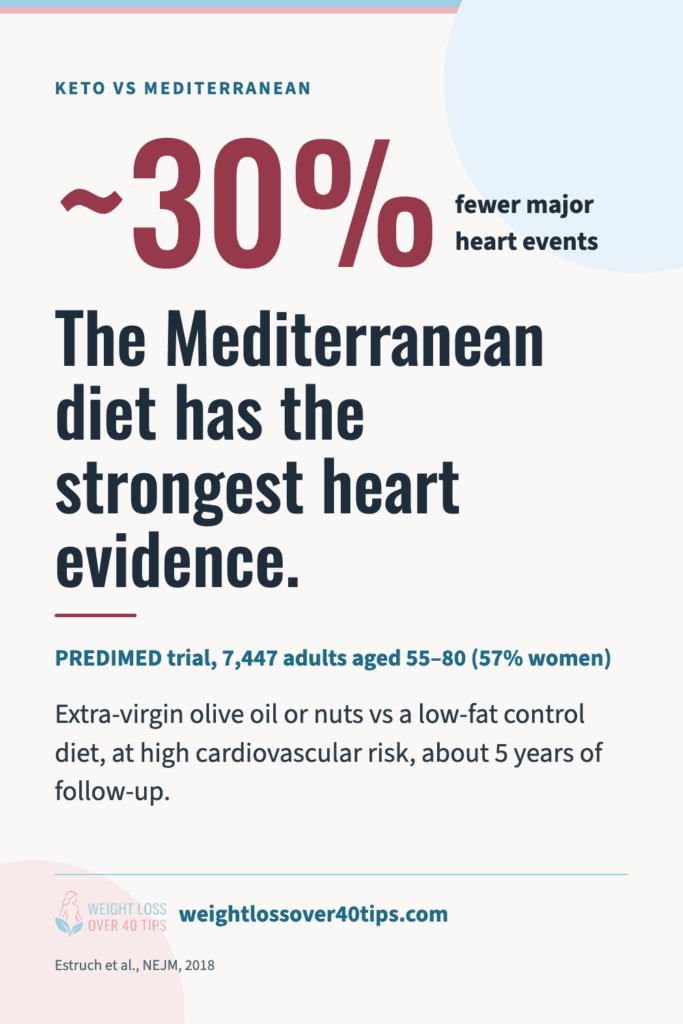
The Mediterranean diet is the clear winner here. The landmark PREDIMED trial, in more than 7,000 older adults at high cardiovascular risk, found that a Mediterranean diet supplemented with extra virgin olive oil or nuts reduced major cardiovascular events by roughly 30% compared with a control diet. The evidence is so strong that the American Heart Association specifically recommends this eating pattern.
Keto’s impact on heart health is more nuanced and controversial. A 2013 meta-analysis of 13 trials lasting a year or more found that very-low-carb ketogenic diets lowered triglycerides and raised HDL cholesterol, but also raised LDL cholesterol (Bueno et al., British Journal of Nutrition). For women over 40 who may already have rising cholesterol levels, this is a risk worth discussing with your doctor.
Bone Health
Bone density naturally decreases after 40, accelerating after menopause. The Mediterranean diet includes plenty of calcium-rich foods (dairy, leafy greens, sardines) and vitamin D sources (fatty fish, eggs). Several studies have linked Mediterranean diet adherence to higher bone mineral density in postmenopausal women.
Keto raises some concerns. The elimination of dairy (in stricter versions) and most fruits can reduce calcium and vitamin K intake. If you follow keto, ask your doctor whether you need calcium, vitamin D or magnesium supplements.
Energy and Mood
Keto is infamous for the “keto flu” — a period of fatigue, brain fog, headaches, and irritability that can last anywhere from a few days to two weeks. Once you’re through this adaptation phase, some people report improved mental clarity and more stable energy levels. However, some people never feel fully adapted.
The Mediterranean diet typically provides steady, reliable energy from day one. The combination of complex carbohydrates, healthy fats, and protein keeps blood sugar stable. The omega-3 fatty acids in fish have also been shown to support brain health. If low energy is a concern, learning to boost your metabolism after 40 can make a big difference.
Cost and Practicality
Keto tends to be more expensive. Quality meats, fatty fish, avocados, nuts, and specialty keto products add up. Eating out can be challenging. Social situations become exercises in willpower.
The Mediterranean diet is generally more affordable, especially when you lean into legumes, whole grains, and seasonal produce. Eating out is much easier. If meal prep still feels overwhelming, you might explore meal delivery services designed for weight loss over 40.
Need a structured meal plan? See our picks for the best weight loss programs for women over 40 — including programs that offer keto and Mediterranean-style plans.
Which Diet Is Better for Women Over 40?
After weighing all the evidence, the Mediterranean diet comes out ahead as the better overall choice for most women over 40. It has stronger evidence for heart health, and it is easier to sustain and more practical for most people.
That said, keto isn’t without merit. If you have significant insulin resistance, are prediabetic, or need to lose a substantial amount of weight to reduce immediate health risks, a well-monitored ketogenic diet can deliver faster results.
The most important factor? Whichever diet you can stick to consistently. A “perfect” diet that you abandon after three weeks is infinitely worse than a “good” diet you maintain for years. For a comprehensive look at what works long-term, visit our pillar guide to weight loss programs for women over 40.
Can You Combine Both Diets?
Absolutely — and this might be the smartest approach of all. The “Keto-Mediterranean” hybrid takes the best elements of both diets: the healthy fats, fish, vegetables, and anti-inflammatory focus of the Mediterranean diet, combined with the lower-carb ratios of keto.
In practice, this looks like a Mediterranean-style diet where you swap out the grains and legumes for extra healthy fats, more non-starchy vegetables, and additional protein. You’d keep your total carb intake around 50–100 grams per day instead of keto’s strict 20–50 grams.
A small 12-week study of 31 adults in Nutrition Journal found that a Spanish ketogenic Mediterranean diet, rich in olive oil and fish, led to weight loss and better blood lipids, although it had no comparison group. Another option is cyclical keto — following strict keto for 5 days, then switching to Mediterranean-style eating for 2 days. Some people also combine it with intermittent fasting.
Struggling with belly fat specifically? Diet is only part of the equation. Read our guide on how to lose belly fat after 40 for targeted strategies that work alongside any eating plan.
Getting Started: Practical Tips
- Start with the Mediterranean diet. Spend 4–6 weeks eating Mediterranean-style. Focus on adding the good stuff rather than obsessing over what to remove.
- Track how you feel. Pay attention to your energy, sleep quality, cravings, and how your clothes fit.
- Consider short keto cycles. If you hit a plateau, try 2–4 weeks of keto, then return to Mediterranean eating.
- Add movement. Even 30 minutes of walking daily makes a significant difference. Explore exercises specifically designed for weight loss after 40.
- Consult your doctor. Before making any major dietary changes — especially keto — talk to your healthcare provider.
Not sure where to begin? Our comparison of popular diet programs can help you find a structured plan that fits your lifestyle and budget.
Want keto structured for a woman over 40? Reverse Health builds a keto plan around your age and hormones rather than a generic macro template, which is where most keto plans fall down after 40. The quiz is free. Take the free quiz → We earn a commission if you buy or sign up through our link.
Frequently Asked Questions
Is keto safe for women over 40?
Keto can be safe for women over 40 when done correctly and under medical supervision, but it’s not ideal for everyone. The strict carb limit is hard to sustain, and research on long-term keto in midlife women is limited. Women with thyroid conditions, a history of eating disorders, or kidney issues should be especially cautious. If you do try keto, consider a modified version (keeping carbs around 50–75 grams rather than under 20) and plan for it as a short-term tool.
Which diet is better for menopause weight gain?
For menopause-related weight gain, the Mediterranean diet is generally the better choice. Around menopause, fat tends to shift toward the abdomen, and the Mediterranean diet is a sustainable pattern with strong evidence for heart and metabolic health. The hybrid approach — Mediterranean with lower carbs — often hits the sweet spot.
Can I do keto long-term?
Most nutrition experts advise against strict keto as a permanent lifestyle, particularly for women over 40. Long-term studies are limited, and there are open questions about effects on cholesterol, bone health and kidney health. A more sustainable approach is using keto cyclically — perhaps 2–4 weeks at a time — while maintaining a Mediterranean or other balanced eating pattern as your baseline.
Will the Mediterranean diet help me lose belly fat?
It can help as part of overall weight loss. In the 18-month CENTRAL trial (278 adults, mostly men), visceral fat fell with both a Mediterranean/low-carb diet and a low-fat diet; adding exercise reduced it further, and the Mediterranean/low-carb diet did better at reducing liver fat. For additional strategies, see our dedicated guide on how to lose belly fat after 40.
Do I need to count calories on either diet?
Strict calorie counting isn’t required on either diet, but being mindful of portions helps. On keto, the natural appetite suppression from ketosis often leads to a calorie deficit without counting. On the Mediterranean diet, portions matter more since the diet includes calorie-dense foods like olive oil, nuts, and whole grains. Rather than counting every calorie, focus on eating slowly, using smaller plates, and filling half your plate with vegetables.
This article is for informational purposes only and does not constitute medical advice. Always consult with a qualified healthcare professional before starting any new diet or exercise program, especially if you have pre-existing health conditions or are taking medications. Individual results may vary.
Correction (11 October 2026): we added a source for keto’s effect on cholesterol and removed an unsourced claim about “hyper-responders”.
Get Your Free 7-Day Meal Plan
Join women over 40 getting weekly weight loss tips, meal plans, and honest program reviews.