
You’re eating the same foods, doing the same workouts, living the same life — but suddenly your clothes don’t fit. If you’re in your 40s or 50s and your body seems to be changing shape even though your habits haven’t, the menopause transition is a big part of the story.
Long-term studies of midlife women show that the scale doesn’t suddenly speed up at menopause: in the SWAN study, weight rose steadily through midlife without accelerating at the transition. What menopause does change is body composition. Fat gain speeds up, muscle declines, and more fat settles around the abdomen, as a review in Climacteric also concluded. None of this is inevitable. Here’s what’s happening in your body and — more importantly — what you can do about it.
What Causes Menopause Weight Gain?
Menopause weight gain isn’t caused by one single factor. It’s a perfect storm of hormonal, metabolic, and lifestyle changes happening simultaneously.
Estrogen Decline and Fat Redistribution
Estrogen plays a key role in regulating where your body stores fat. Before menopause, estrogen directs fat to your hips, thighs, and buttocks. As estrogen drops, your body begins storing fat around the abdomen instead.
This visceral fat (deep belly fat) is different from the fat you can pinch. It wraps around your internal organs and is metabolically active — meaning it produces inflammatory compounds that increase your risk of heart disease, type 2 diabetes, and certain cancers.
Progesterone and Water Retention
Progesterone levels decline even faster than estrogen during perimenopause. Hormonal fluctuations can bring water retention and bloating for some women, which can make the scale jump before any real fat gain. Many women mistake this for “real” weight gain, leading to frustration and crash dieting — which makes things worse.
Muscle Loss Accelerates
The combination of declining estrogen, lower testosterone, and often reduced physical activity leads to accelerated muscle loss during the menopause transition. Losing muscle makes it harder to stay strong and active, and harder to manage your weight.
Sleep Disruption
Hot flashes, night sweats, and anxiety can devastate sleep quality during menopause. Poor sleep is linked to more hunger and cravings, and it leaves you with less energy to exercise and eat well the next day.
Thyroid Changes
Thyroid disorders become more common during menopause. An underactive thyroid (hypothyroidism) directly slows metabolism, causes fatigue, and promotes weight gain. If you’re gaining weight despite your best efforts, get your thyroid checked — it’s a simple blood test that could change everything.
The Menopause Weight Gain Timeline
Understanding when and how these changes happen can help you prepare and respond:
| Stage | Age (typical) | What Happens |
|---|---|---|
| Early Perimenopause | 38-44 | Progesterone starts declining. Subtle changes in fat distribution. Sleep may start to suffer. |
| Late Perimenopause | 44-50 | Estrogen fluctuates wildly. Hot flashes begin. Belly fat accumulation accelerates. Muscle loss speeds up. |
| Menopause | 50-52 (avg) | 12 months without a period. Hormones reach new baseline. Weight gain may plateau. |
| Post-Menopause | 52+ | Hormones stabilize at lower levels. Weight management becomes more predictable but requires ongoing effort. |
The Symptoms Nobody Mentions in Weight Loss Articles
Everything above treats menopause as a weight problem. For most women it isn’t — it’s a whole set of changes arriving at once, and several of them quietly decide how much you can actually do. That matters here, because the strategies in the next section all assume you can move comfortably and want to be seen doing it.
- Bladder leaks. Falling estrogen weakens the tissue supporting the urethra and pelvic floor, and leaking during a jump, a sneeze or a run becomes common. This is the one that quietly ends exercise routines: women stop running, stop the class, stop the trampoline — and the drop in activity looks like a willpower problem when it is a plumbing one. Pelvic floor training helps many women; a GP or a pelvic health physiotherapist is the right first call. In the meantime, leakproof underwear is what a lot of women use as a workaround — it treats nothing, but it is often the difference between skipping the class and going. Reader offer: 10% off your first EverLeakProof order with code
WELCOME10. Valid until November 13, 2027. We earn a commission if you buy or sign up through our link. - Hair thinning. Estrogen keeps hair in its growing phase longer. As it declines, more follicles rest at once and the part line widens. It is rarely total loss, and it is not caused by the weight change — but it arrives at the same time, which makes the whole period feel like one process.
- Skin dryness and collagen loss. The skin loses collagen fastest in the years right after menopause. Dryness, thinner skin and slower healing are the visible part. Richer moisturisers make the dryness livable — but be clear about what they do: nothing applied on top replaces the collagen underneath. If you want to switch to something gentler while your skin is more reactive than it used to be, plant-based skincare is one option, and it is comfort rather than correction.
- Vaginal dryness and discomfort. The least discussed of the list, and one of the most common. It affects sleep, exercise and intimacy — and it is treatable, which is exactly why it deserves a mention rather than a silence.
- Joint aches. Estrogen has an anti-inflammatory role, and its decline often shows up as stiff mornings and sore knees. This one interacts directly with the advice to strength train — the answer is usually a different movement, not no movement.
We are not doctors and this is not a treatment plan. The reason these belong in an article about weight is simpler than that: a symptom that stops you moving will affect your weight more than any macro ratio. If one of these is quietly shaping what you do and don’t do, it is worth raising with your doctor before you conclude that the problem is discipline.
8 Evidence-Based Strategies to Fight Menopause Weight Gain
1. Increase Protein Intake Significantly
Protein becomes even more critical during menopause. Protein needs rise with age: an expert group (PROT-AGE) recommends 1.0-1.2 grams of protein per kilogram of body weight daily for adults over 65, compared with the standard 0.8 g, and many experts suggest aiming higher while losing weight. See our protein guide for details.
Practical targets: aim for 25-35g protein per meal. Start your day with eggs, Greek yogurt, or a protein smoothie rather than toast or cereal.
2. Strength Train at Least 2x Per Week
This is one of the most useful habits you can build during menopause. Strength training:
- Builds and preserves calorie-burning muscle
- Improves bone density (crucial as osteoporosis risk increases)
- Reduces visceral belly fat
- Improves insulin sensitivity
- Boosts mood and reduces anxiety
Start with compound exercises: squats, lunges, rows, and presses. US physical activity guidelines recommend muscle-strengthening activity on at least 2 days a week, and 20-30 minutes per session is enough to start.
3. Reduce (Don’t Eliminate) Refined Carbs
As insulin resistance increases during menopause, your body handles processed carbs and sugar less efficiently. Focus on:
- Swapping white bread/pasta for whole grain versions
- Choosing sweet potatoes over white potatoes
- Eating fruit whole instead of drinking juice
- Pairing carbs with protein or healthy fat to slow blood sugar response
4. Prioritize Anti-Inflammatory Foods
A diet built on minimally processed foods supports your overall health through menopause. Focus on foods like these:
- Fatty fish (salmon, sardines, mackerel) — omega-3s
- Leafy greens and cruciferous vegetables
- Berries, cherries, and colorful fruits
- Turmeric, ginger, and green tea
- Olive oil, nuts, and seeds
5. Fix Your Sleep
Good sleep makes every other habit easier. Strategies that help:
- Keep bedroom temperature cool (65-68°F / 18-20°C) — helps with night sweats
- Consider a cooling mattress pad or moisture-wicking sheets
- Magnesium glycinate before bed (some people find it helps with sleep; ask your doctor first)
- Consistent sleep/wake times — even on weekends
- Limit alcohol (it triggers hot flashes and disrupts deep sleep)
6. Manage Stress Actively
Chronic stress can make healthy habits harder to keep. Even 10 minutes of meditation, deep breathing, yoga, or simply walking outside can help you feel calmer.
7. Consider Supplements (With Your Doctor)
Some supplements show promise for menopause symptoms and weight management:
- Magnesium — some people use it for sleep; evidence is limited
- Vitamin D — worth checking with your doctor, especially if you get little sun
- Omega-3 fish oil — an option if you rarely eat oily fish
- Black cohosh — may reduce hot flashes (mixed evidence)
- Probiotics — emerging research links gut health to weight management
- Perimenopause Weight Loss: What Actually Works
Always discuss supplements with your doctor, especially if you take medications.
8. Don’t Crash Diet
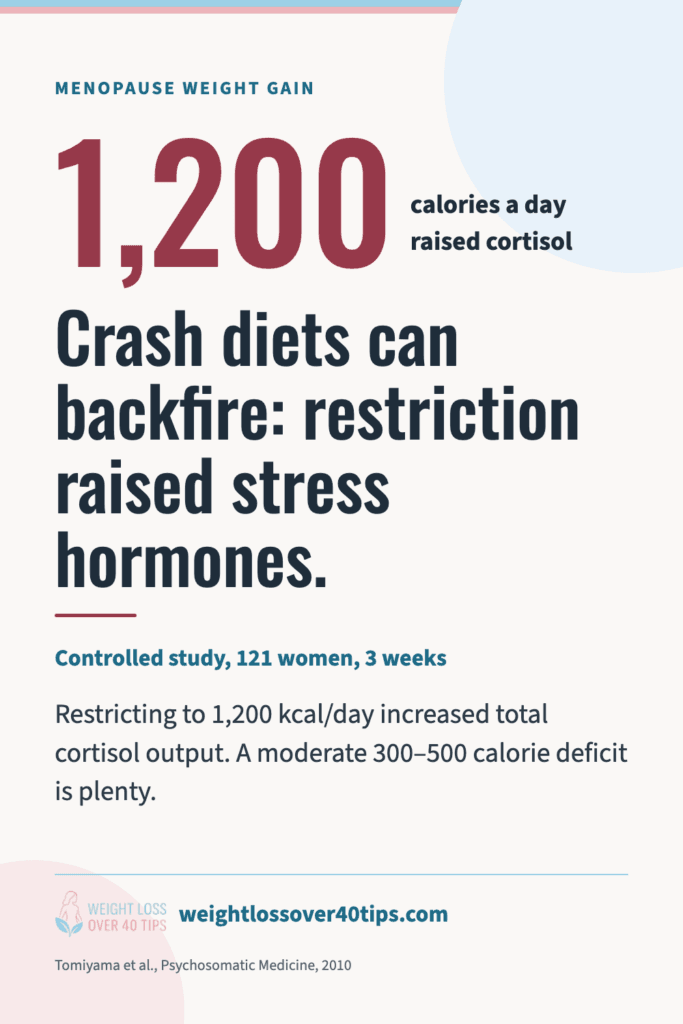
This deserves special emphasis. Extreme calorie restriction during menopause is counterproductive. It is hard to sustain, makes it harder to keep muscle, and in one study a 1,200-calorie diet increased cortisol output in women. A moderate deficit of 300-500 calories per day is plenty. Slow and steady wins this race.
Programs Designed for This Stage of Life
If you want structured support, these programs address the unique challenges women face during and after menopause:
- Noom — Psychology-based approach that addresses emotional eating and mindset — perfect for the stress-related challenges of menopause.
- The Smoothie Diet — Nutrient-dense smoothie meals that simplify nutrition without extreme restriction. Anti-inflammatory ingredients align well with menopause needs.
- Anti-Inflammatory Diet for Women Over 40
Other programs worth exploring: WW (Weight Watchers) for flexible point-based eating, Reverse Health for personalized coaching, and Dr. Kellyann’s bone broth protocol for anti-inflammatory support. For daily nutrition, see our Huel review and AG1 greens review.
👉 See all recommended programs for women over 40
📥 Free Download: 7-Day Meal Plan for Women Over 40
High-protein, hormone-supporting meals + complete shopping list. Designed specifically for your body after 40.
Get the Free Meal Plan →Built for this stage: Reverse Health is the one on that list designed specifically around menopause rather than adapted for it. The quiz is free and shows you the plan it would build for your stage before you decide anything. Take the free quiz →
Frequently Asked Questions
For medical insights on this topic, see the Mayo Clinic’s guide on menopause weight gain.
The Bottom Line
Menopause weight gain is real, but it’s not destiny. By understanding the hormonal changes driving it and adopting targeted strategies — more protein, strength training, anti-inflammatory foods, better sleep, and stress management — you can maintain a healthy weight through this transition and beyond.
The most important thing? Start now. The earlier you implement these changes, the less weight you’ll gain in the first place — and the easier it’ll be to lose what you’ve already gained.
A great first step is knowing your numbers. Use our free BMI Calculator to see where you stand, then check our Calorie Calculator to find the right daily intake for your goals.
Related reading:
- How to Lose Weight After 40: Complete Guide
- Best Weight Loss Programs for Women Over 40
- Smoothie Diet vs Noom: Which Is Better?
- Why Is It So Hard to Lose Weight After 40?
- Menopause Weight Gain: What You Can Do
- Walking for Weight Loss Over 40
- Real Weight Loss Success Stories from Women Over 40
- Weight Loss After 40 FAQ — Your Questions Answered
- Intermittent Fasting for Women Over 40
- Sleep and Weight Loss After 40
- 25 Weight Loss Statistics for Women Over 40
Disclaimer: This article is for informational purposes only and does not constitute medical advice. Menopause affects every woman differently. Always consult your healthcare provider before making changes to your diet, exercise routine, or starting supplements or HRT.
Get Your Free 7-Day Meal Plan
Join women over 40 getting weekly weight loss tips, meal plans, and honest program reviews.